
B2B distributor · 22 brands · 1,900+ references · Technical advice

Oil hose reels

Lubrication and hydraulics, two distinct trades

Oil dispensing in the workshop works at a few tens of bar and looks for flow. Hydraulics works at 200, 350 or 400 bar and looks for pressure resistance. The same reel does not suit both.

Request a quote
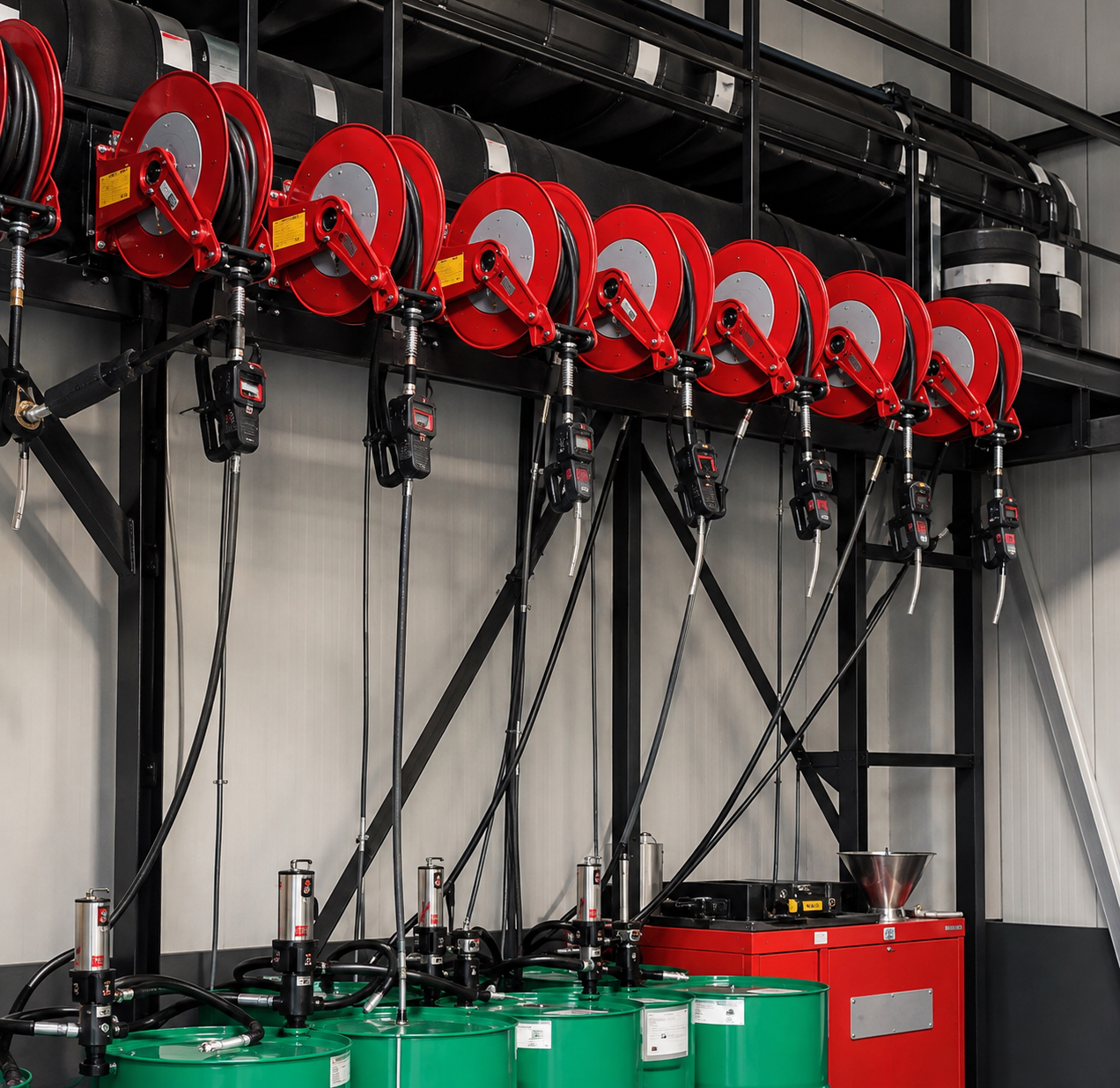
Lubricant dispensing station in a heavy-vehicle workshop, wall-mounted reel and metered dispensing gun
1
One reel per fluidA drum that has carried one oil cannot be flushed: workshops fit one station per product.
2
Compatible sealsNBR for mineral oils, Viton or PTFE for synthetics and high temperatures.
3
Overhead mountingA ceiling-mounted reel frees the floor and removes the main cause of hose wear.
4
Brake and stopThey prevent a full hose snapping back and allow the paid-out length to be held.

Our oil range

From the lubrication station to hydraulics


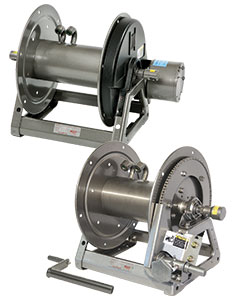
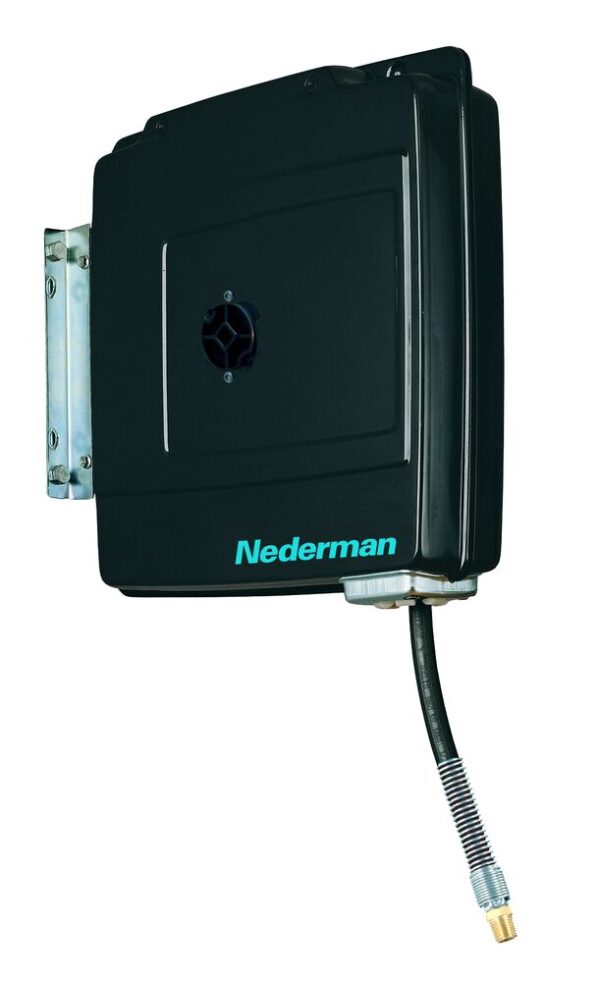
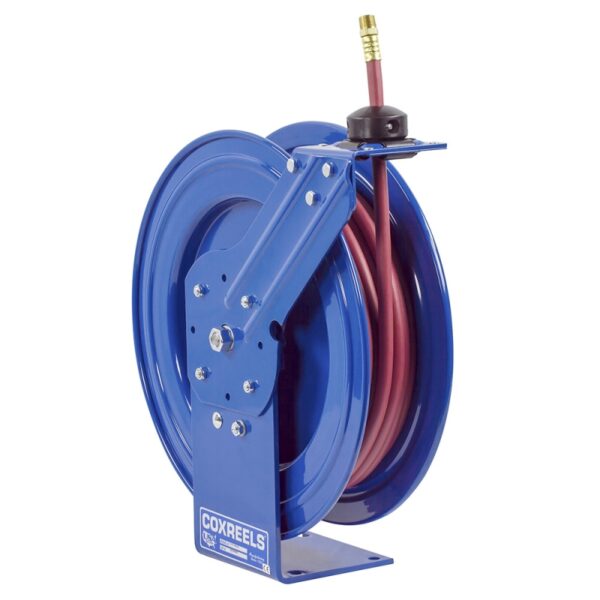
Enclosed reels for the workshop, open drums for high-pressure hydraulics, stainless steel versions for food-grade oils. Overview opposite.

Filter the whole range →

Lubrication or hydraulics: the first sort

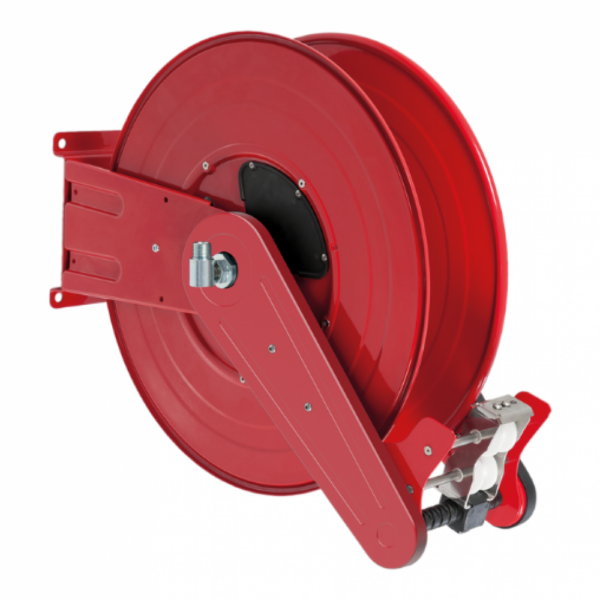
In lubricant dispensing, the reel feeds a metered gun from a drum or tank, via a pneumatic pump. Pressure stays moderate and the critical point is viscosity: a thick oil in a hose that is too thin turns the pump into a brake.

In hydraulics, the reel carries a fluid under high pressure to a tool or a cylinder. Everything then rests on the pressure rating of the assembly and on the quality of the swivel joint, which endures pressure and rotation simultaneously.

Viscosity, diameter, temperature

The viscosity of an oil varies strongly with temperature: an oil that flows freely in a heated workshop turns pasty in an unheated room in winter, and the flow collapses. That is why the diameter is oversized in lubricant dispensing rather than raising the pump pressure — the latter wears the equipment without solving the problem.

In practice, Ø 1/2″ covers most lubrication stations; Ø 3/8″ is enough in hydraulics, where pressure compensates for the reduced cross-section.

The seals decide compatibility

Conventional mineral oils are happy with NBR, standard and economical. Synthetic oils, some fire-resistant hydraulic fluids and high temperatures require Viton or PTFE. An incompatible seal does not show immediately: it swells, hardens, then leaks after a few months.

For food-grade oils, stainless steel and suitable seals become the rule, for reasons of hygiene as much as compatibility.

Floor marking, the criterion discovered too late

A standard hydraulic hose has a black cover loaded with carbon black. Unwound and dragged several times a day over a painted floor, workshop tiles or a light-coloured resin, it leaves a grey mark that cleaning does not remove. The defect only appears after several weeks, when the damage is done.

The criterion exists and takes one sentence to ask: is the hose non-marking? Few manufacturers offer it in their catalogue, so it must be checked before ordering rather than hoped for. At Zeca, references 8446 and 8448 of the 8400 series use the 10 mm 1SC hose at 180 bar in a blue non-marking version, in 15 and 18 metres.

The rest of the series covers oil from 160 to 400 bar depending on the hose fitted. On high pressures and pressure-rating questions, see also the grease reels page.

Oil hose reels in the catalogue

94 références au catalogue GEDO, réparties sur 8 marques. Chaque fiche porte son tableau de références complet.

COXREELS

GEPRO

HANNAY

NEDERMAN

REELCRAFT

SAURO ROSSI

TEHA

ZECA

Oil dispensing reel in a heavy-vehicle workshop

GEDO, multi-brand distributor

Equipping a workshop, not just a station


A heavy-vehicle workshop commonly lines up four to six different fluids. We design the whole: number of stations, shared bracket, diameters per fluid and seal compatibility, so that each product has its own dedicated line.

Frequently asked questions

Can a water reel be used for oil?

Not without checking. The drum often copes, but the swivel-joint seals and the hose are sized for water. An NBR seal intended for water will hold on a mineral oil, not necessarily on a synthetic oil.

What pressure for a lubrication station?

It depends on the ratio of the pneumatic pump. A 3:1 ratio fed at 8 bar delivers about 24 bar, a 5:1 ratio about 40 bar. Size on the pump outlet pressure, not on the air pressure.

Is one reel per fluid necessary?

Yes, as soon as the fluids differ. A reel that has carried oil cannot be flushed: the residue contaminates the next fluid.