Fire hose reel, additive station, industrial reel: three distinct pieces of equipment
Three families are commonly called “fire reels” and meet neither the same standards nor the same needs.
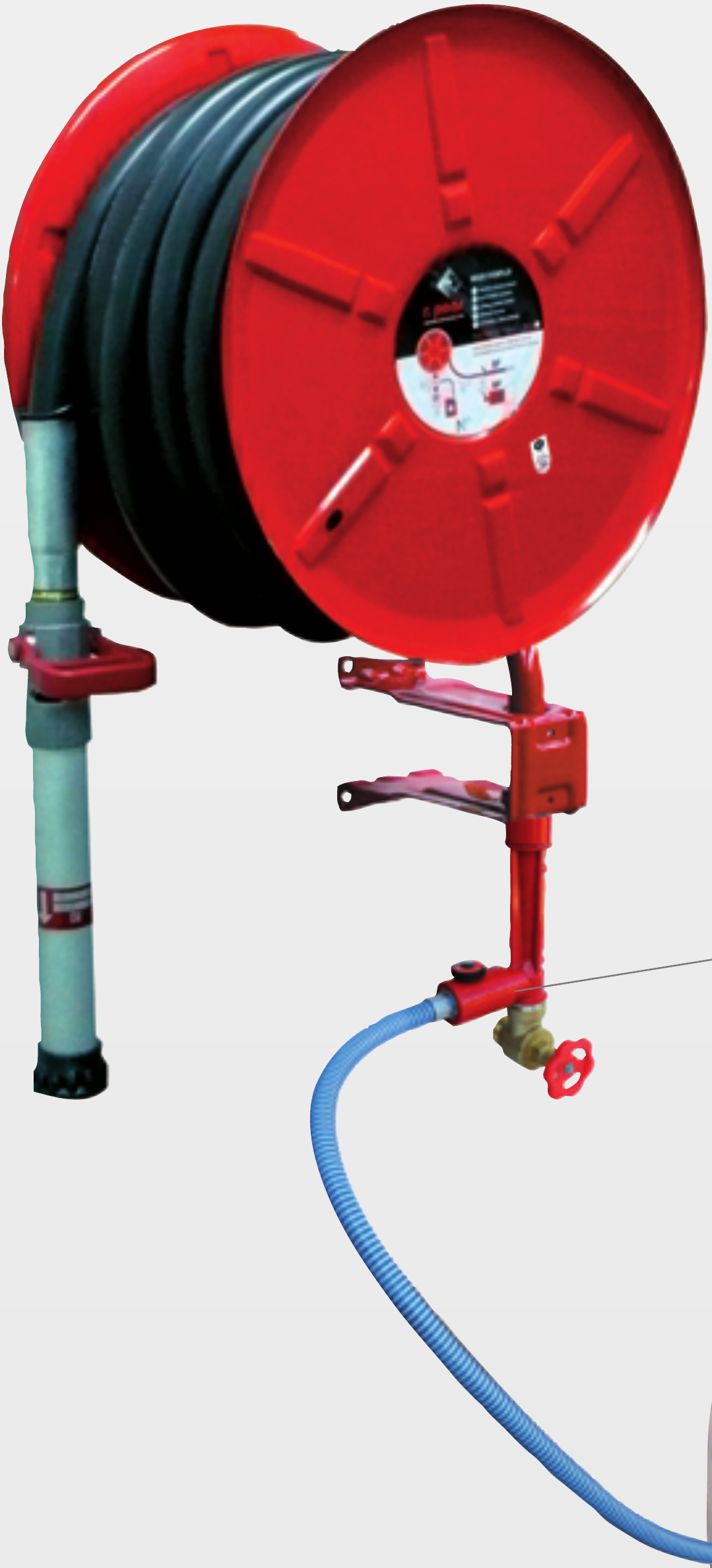
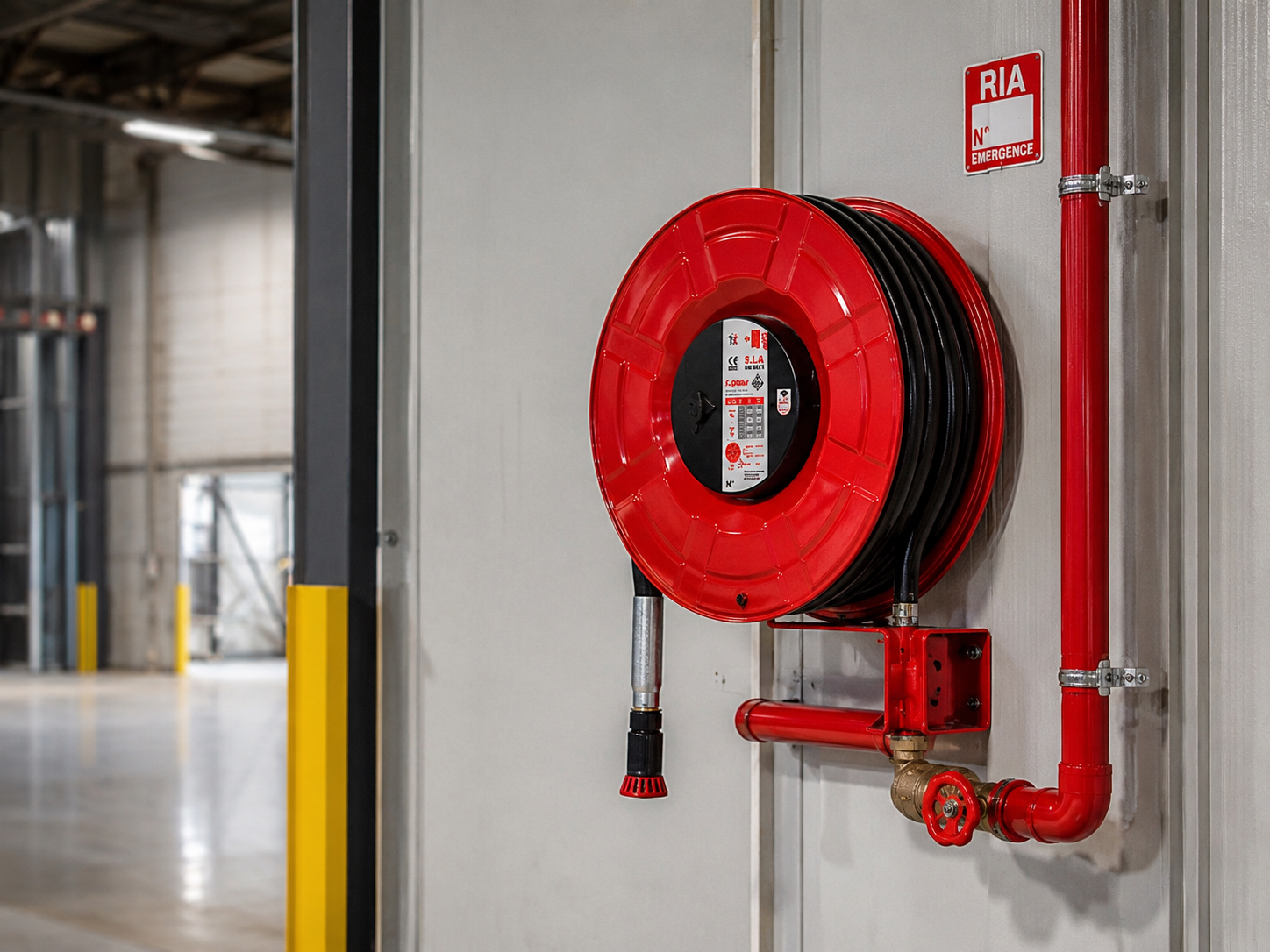
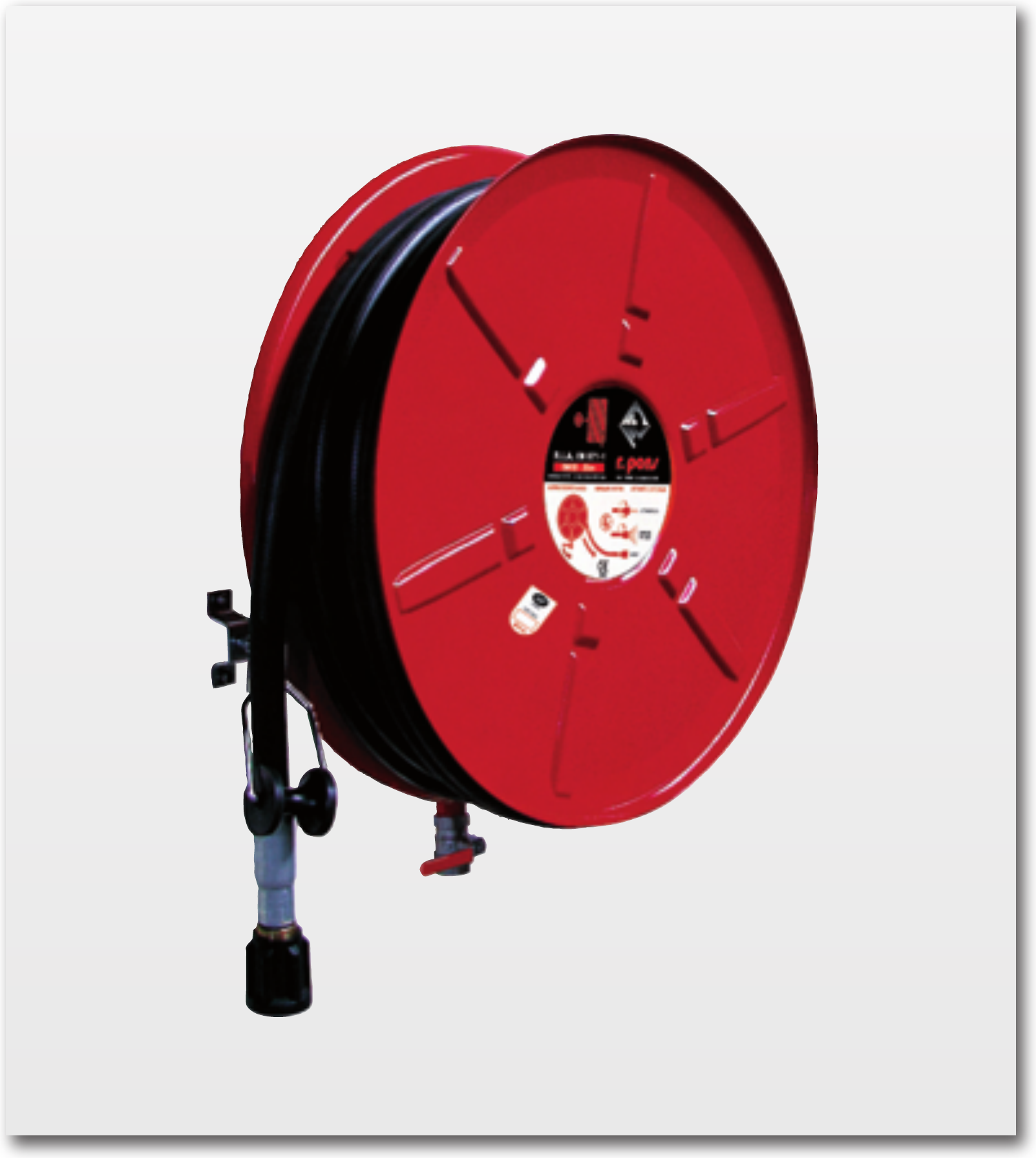
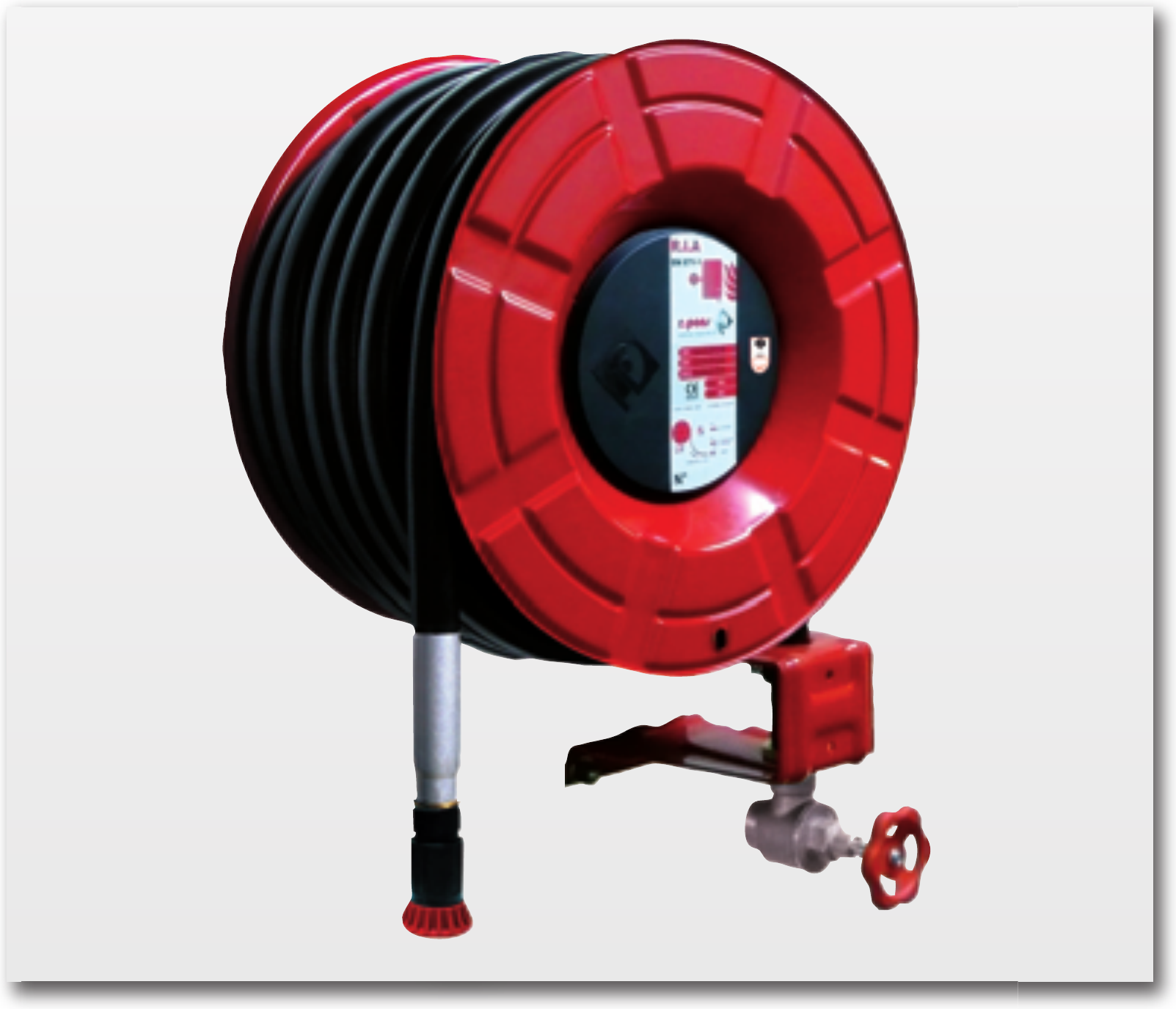
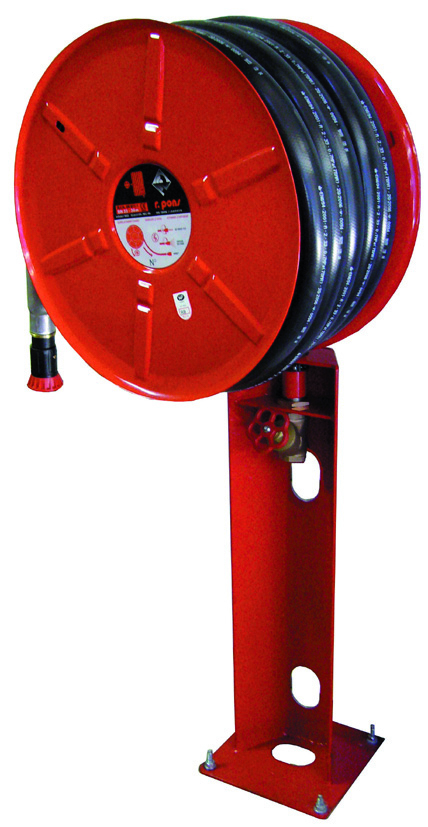
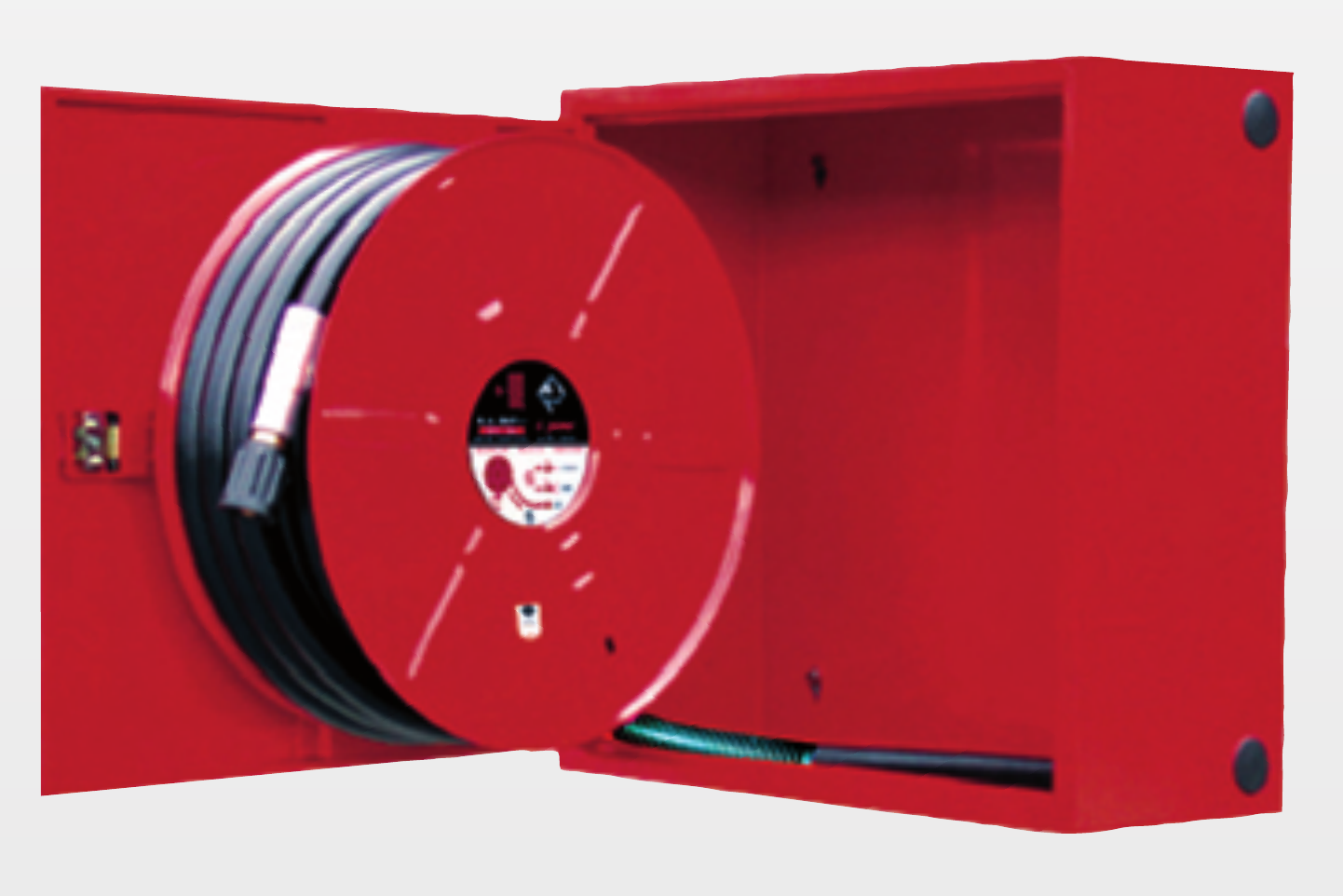
The fire hose reel (RIA in French regulations) is a fixed piece of equipment with a semi-rigid hose, permanently connected to the water supply, intended for first response by the staff present. It falls under EN 671-1, in DN 19, 25 or 33.
The additive fire station (PIA) takes the same principle and adds a foam concentrate to produce foam. It is required where water alone is ineffective or makes things worse: hydrocarbons, solvents, flammable liquid storage.
The industrial fire reel is an industrial drum intended for supply or pressure washing, without the regulatory status of the fire hose reel. It is used on vehicles, as a complement to an installation or as a safety water point.
The confusion is costly both ways: installing an industrial reel where the regulations expect a fire hose reel brings no compliance, and installing a fire hose reel where a water point would do ties up a budget for no benefit.
Why the semi-rigid hose changes everything
A lay-flat hose must be fully unrolled before being charged with water. The semi-rigid hose of a fire hose reel keeps its cross-section even when wound: it can be pressurised while only part of it is paid out. That is precisely what makes an immediate response by a single person possible, with no prior manoeuvre.
In return, this property requires a hollow-shaft reel with a permanent swivel joint, and a swinging reel allowing the hose to be pulled in any direction from its housing.
Choosing the diameter
DN 19 covers ordinary risks and remains manageable by a single person. DN 25 provides a higher flow for greater risks or longer distances. DN 33 is reserved for high risks.
The choice is not a matter of comfort: it follows from the establishment’s risk assessment, which also determines the number of stations and their location. A correctly sized station that is cluttered or hidden does not fulfil its function — signage and accessibility are an integral part of compliance.
Low or medium expansion foam: the deciding factor is the geometry of the risk
The expansion ratio is the ratio between the volume of foam produced and the volume of foam solution it came from. On a first-intervention unit, only two families apply: low expansion, a ratio below 20 and typically around 10 on additive station nozzles, and medium expansion, a ratio of 20 to 200 and typically around 70. Above 200, high expansion foam is the business of fixed generators, not of an additive station.
The choice is not about power but about the geometry of the risk: an open risk exposed to wind calls for low expansion, a volume to be filled calls for medium expansion.
- Low expansion — dense foam, little affected by wind, thrown a long way: 24 m in a straight jet on a DN 33 R. Pons additive station. It spreads over the surface of a burning liquid and withstands radiant heat. This is the choice for tanker unloading areas, outdoor docks and any open surface that has to be covered from a distance.
- Medium expansion — a far greater volume of foam for the same amount of water and foam concentrate, but a reduced throw: 6 m on the same unit. This is the choice for pits, service trenches, enclosed rooms and deep bunds, that is, anything that is filled rather than covered.
A containment bund falls into either case depending on its shape: open, ventilated and reachable from the edge, it is covered with low expansion foam; deep, confined or out of close reach, it is filled with medium expansion foam. The nozzle is selected when ordering — each version has its own part number — so a site with both configurations is covered by the number of units, not by the nozzle.
The proportioning rate is independent of the expansion ratio: depending on the version, the metering valve on the premixer is set to 0 and 3 %, or to 0, 3 and 6 %. The 0 % position allows the unit to be used with plain water.