
Chemical compatibility above all
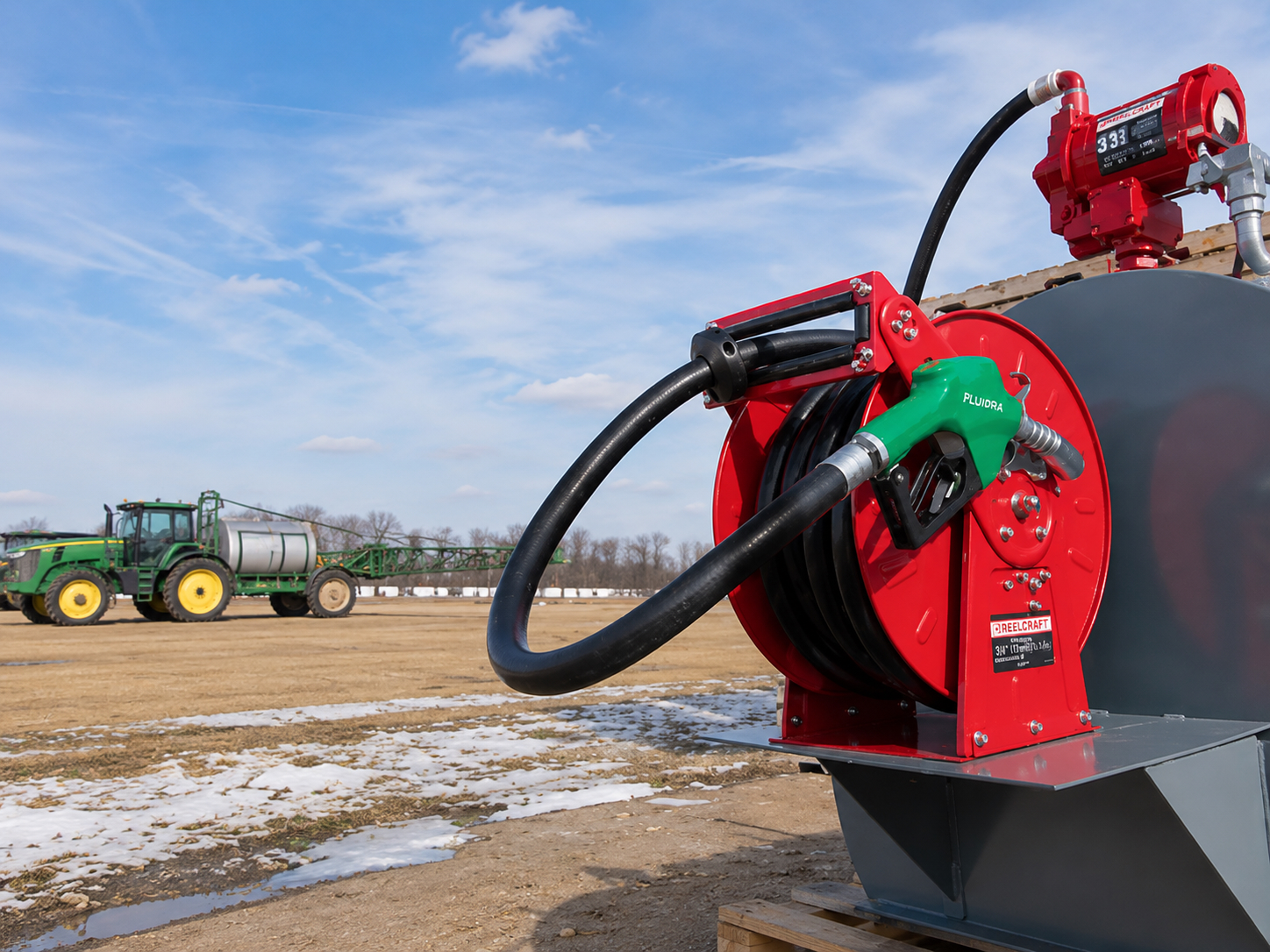
Fuels attack elastomers. NBR copes correctly with ordinary diesel, but fuels with a high aromatic content, biofuels and petrol require Viton. The symptom of an incompatible seal is always the same: swelling, loss of elasticity, leakage at the swivel joint after a few months of service.
The hose follows the same rule and must carry the compatibility marking corresponding to the fuel actually dispensed.
Static electricity is not a detail
A liquid flowing through a hose generates electrostatic charges, and a fuel is both insulating and flammable. The electrical continuity of the assembly and its connection to earth are therefore safety conditions, not comfort options.
At tanker unloading points, an earthing reel completes the arrangement by connecting the tanker to earth throughout the transfer. It is a separate product, and both are necessary. As soon as the area is classified, the reel must be certified for it: see our ATEX page.
The case of AdBlue
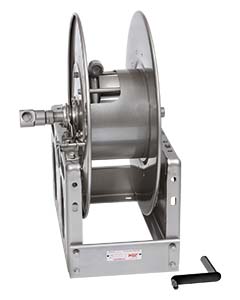
Urea solution is not a hydrocarbon and behaves very differently. It crystallises as it dries and attacks copper, brass and aluminium. A reel intended for AdBlue must therefore exclude these metals in favour of stainless steel — a diesel reel cannot be transposed, despite the proximity of the stations.