
What cleaning products do to equipment
Alkalis used for degreasing attack aluminium and tarnish brass. Descaling acids go for ordinary steels and unsuitable seals. Chlorinated disinfectants cause pitting corrosion on 304 stainless steel, which is why the food industry often requires 316.
The consequence fits in one sentence: with these fluids, the choice is made on the safety data sheet of the product in use, not on a range of reels.
Hot water changes the picture
Food-industry cleaning is often done at 60 or 80 °C. That temperature reduces the admissible pressure of the hose, accelerates the ageing of seals and rules out some materials. Always check that the stated range covers the actual working temperature, not just ambient.
The hygiene of the installation itself
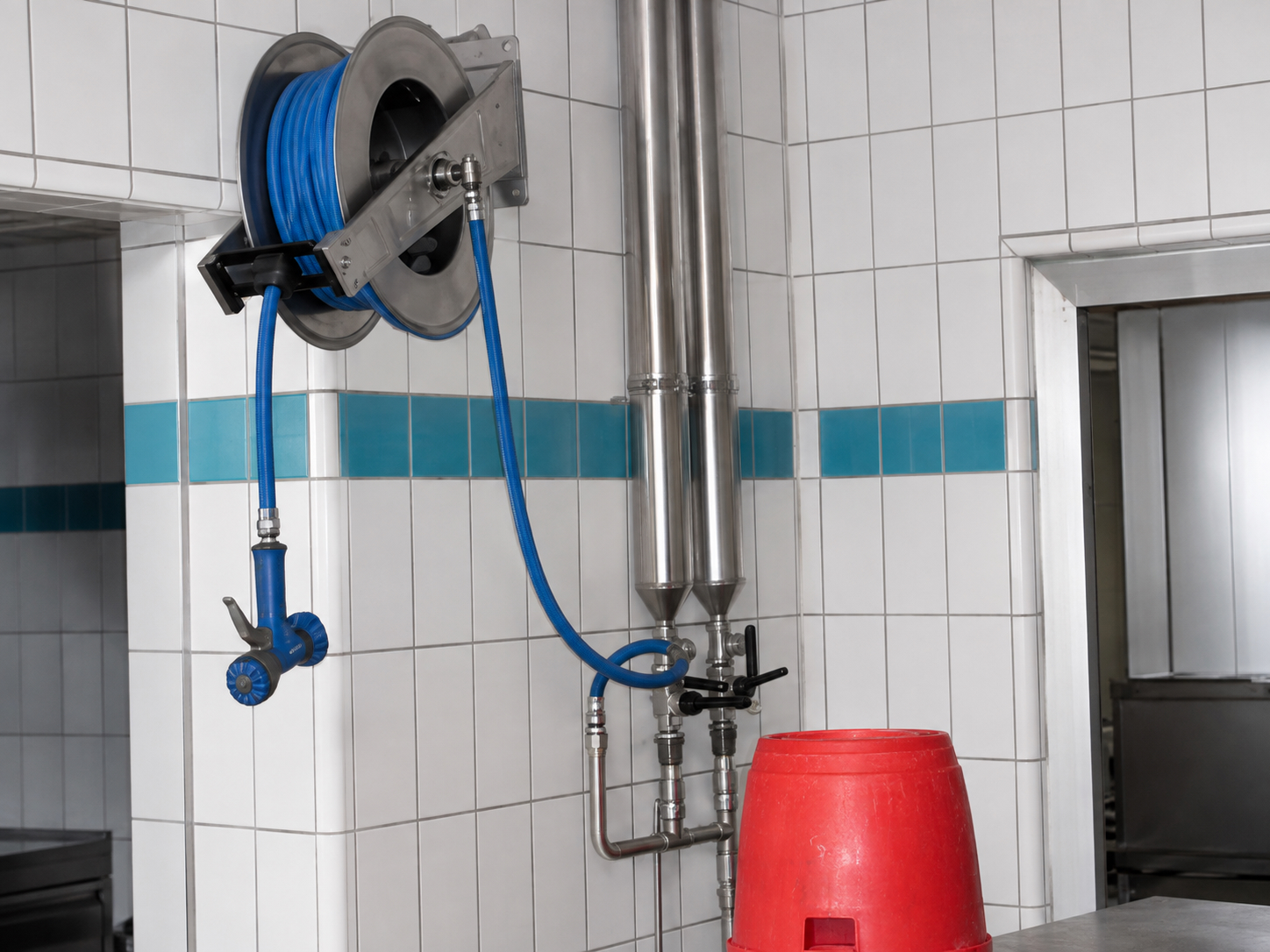
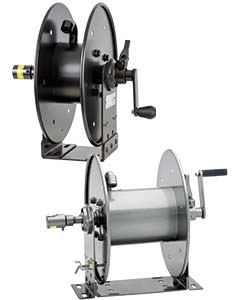
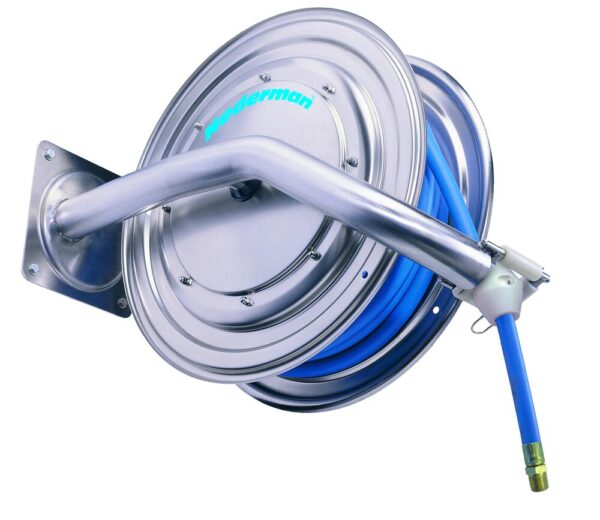
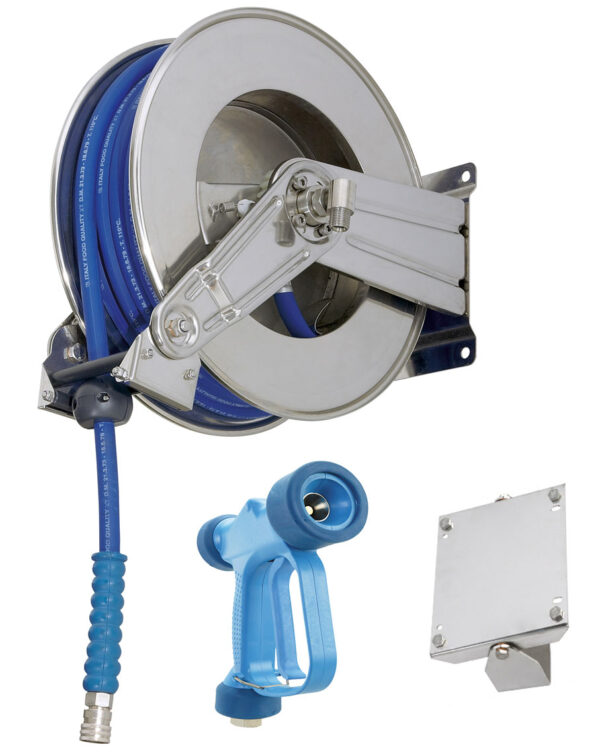
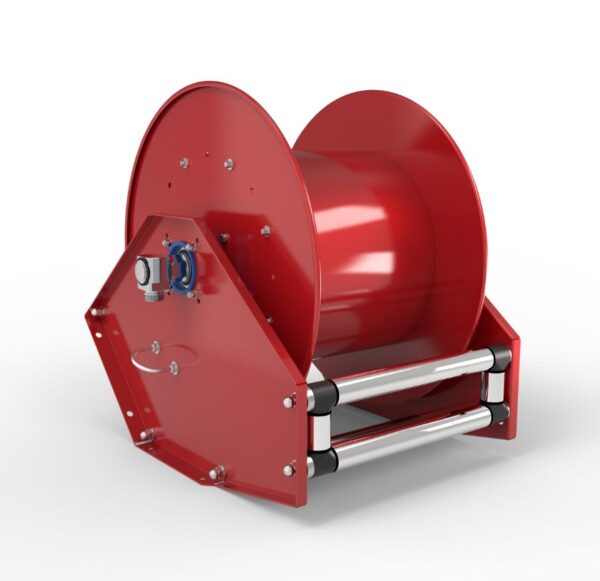
Stainless steel constructions with smooth surfaces, without recesses or exposed screws, can be rinsed and disinfected; a flaking painted-steel drum becomes a retention point. It is an audit criterion, in the same way as production equipment.
Not all stainless steel reels are equal on this point, and the steel grade says nothing about it. What counts is the absence of cavities and dead spaces, whether surfaces can be dismantled, and the design of the swivel joint. Limatec reels are built to the general food-hygiene principles of the CAC/RCP 1-1969 code with a swivel joint machined from solid, and their hoses are crimped in the factory — without a hose clamp, which is a classic retention point flagged at audit. A stainless steel reel fitted with a hose on a clamp remains a reel that is difficult to disinfect.