
Pressure and temperature go together
With saturated steam, temperature is determined by pressure. The direct consequence is that the stated admissible pressure of a hose falls with temperature, and this derating always appears in the manufacturer’s documentation. Reasoning in bar alone, valid for cold water, no longer holds here.
Seals and materials
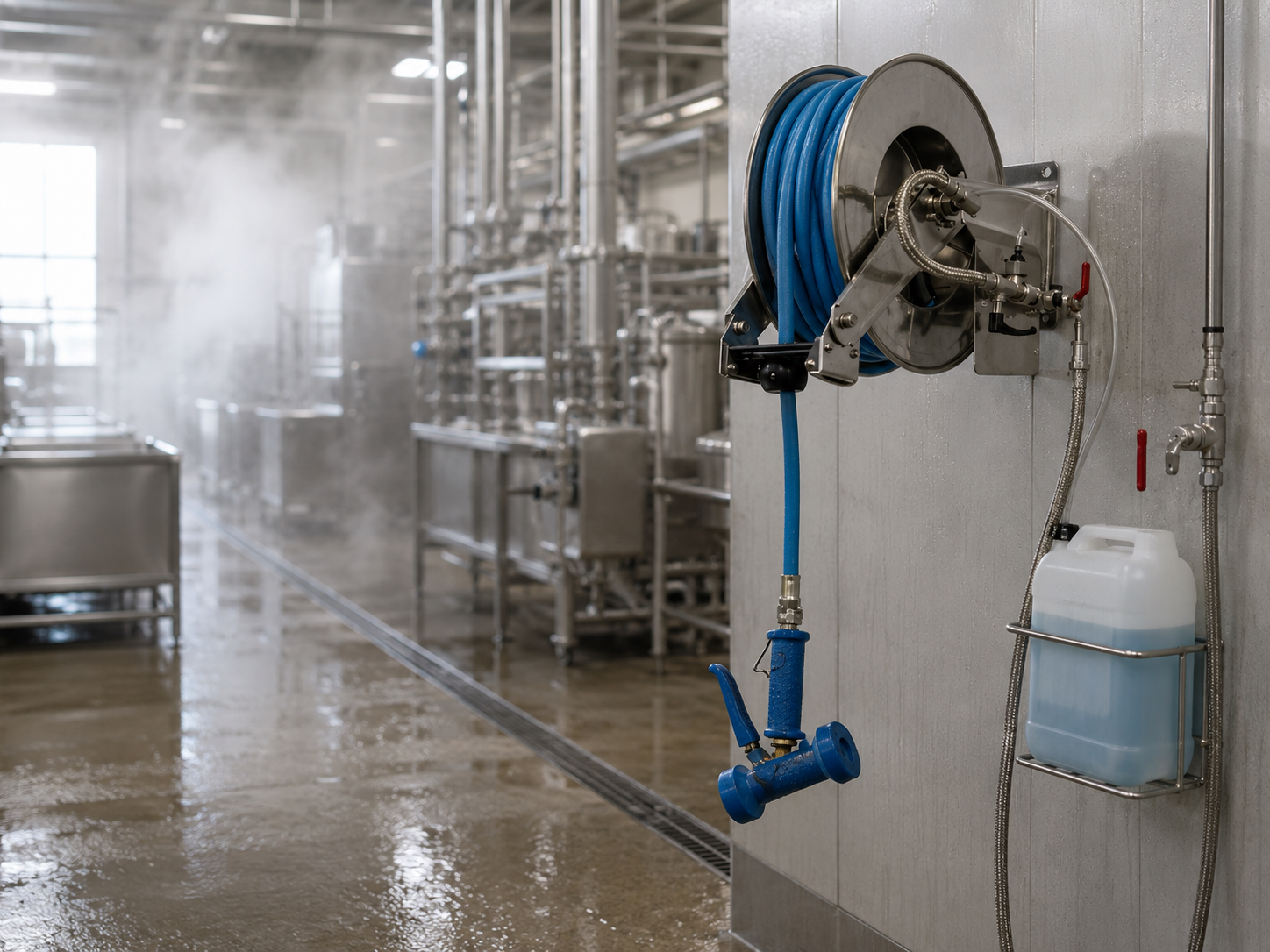
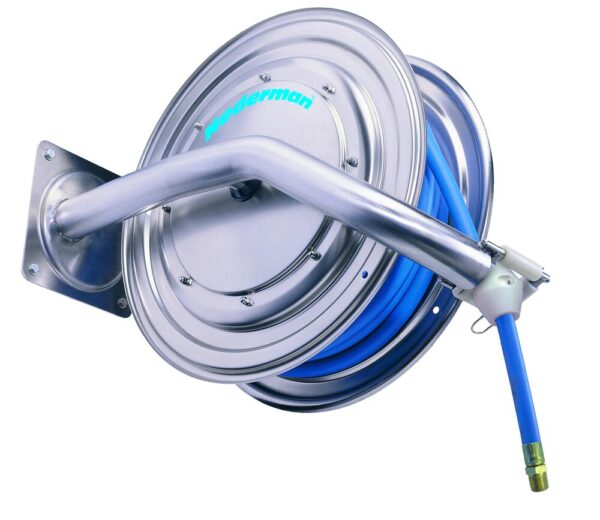
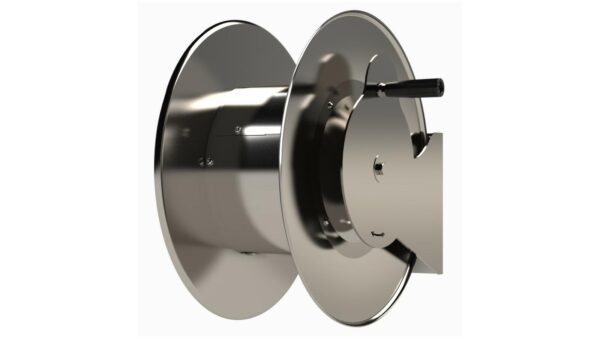
Steam calls for PTFE or graphite-based seals, and a swivel-joint body in brass or stainless steel depending on the temperature and the aggressiveness of the feed water. On the drum side, painted steel is fine as long as the steam stays confined in the hose, but stainless steel is required as soon as the environment is permanently damp — which is common around a steam station.
The Limatec catalogue illustrates well the gap between occasional steam and regular steam service, two needs that commercial vocabulary often confuses. The Bergalav hose in EPDM tolerates occasional steam without being designed for it: very hot water cleaning interspersed with steam does not degrade it, but it is only rated for 10 bar. The Biovast in NBR is the only one built for continuous steam service, at 165 °C in saturated or superheated steam — and it then drops to 6 bar, against 20 bar on water. The same hose therefore changes pressure class according to the fluid it carries, and it is the steam value that must be used for sizing as soon as the line will see any.
Condensate, the often forgotten subject
As soon as the line stops, the steam condenses and water collects at the low points, including the drum. On restart, this slug of liquid is driven out violently: that is water hammer, which breaks couplings and deforms hoses. A low-point drain and a gradual return to pressure prevent it.