
What demarcation does, and what it does not do
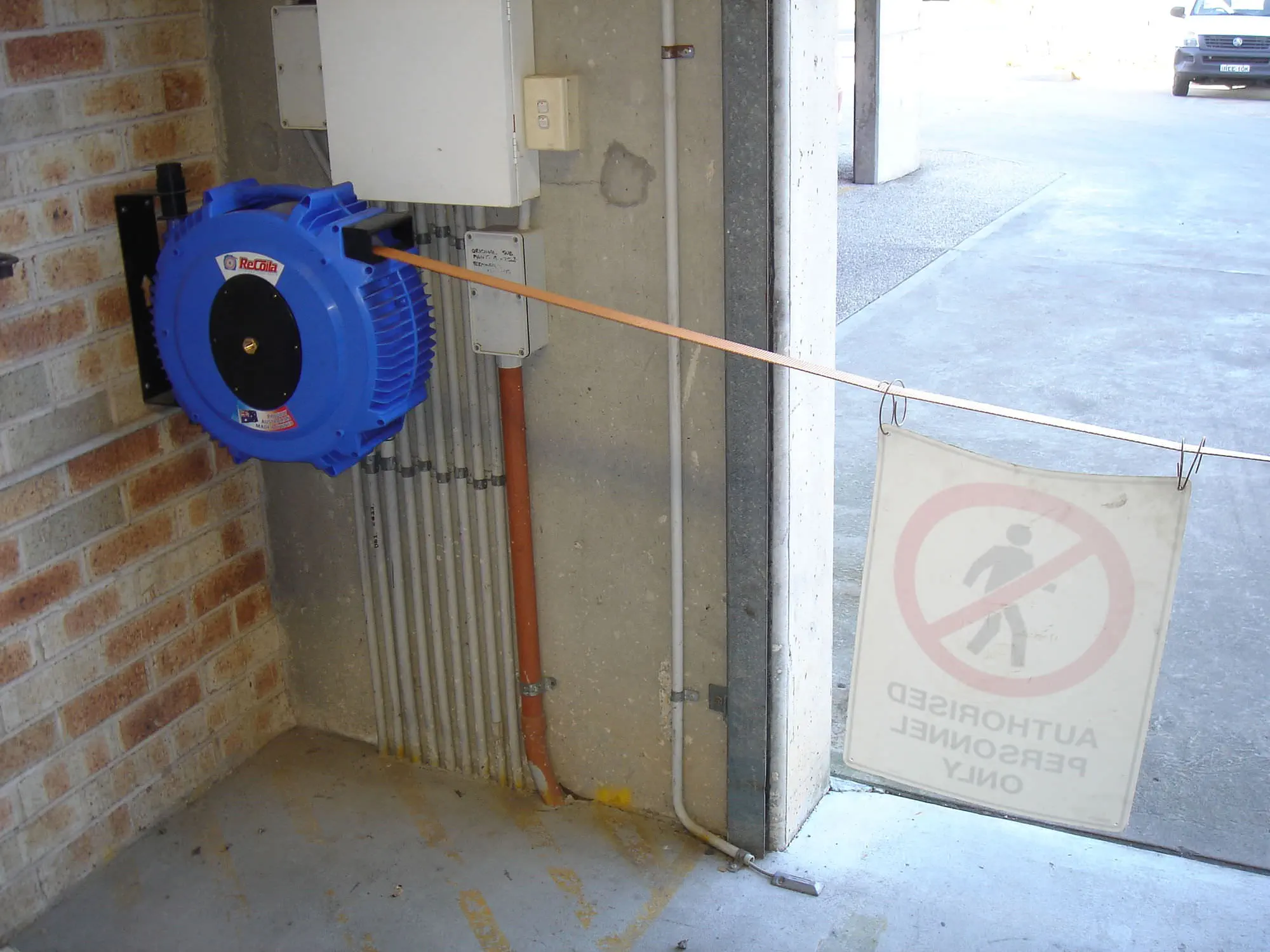
A signalling reel makes an area visible and deters entry. It holds no one back. The distinction seems obvious stated this way, but it gets lost in the field: tape is often used out of convenience where collective protection is required, because it goes up in ten seconds and a barrier has to be brought over.
The rule is easy to keep. As soon as there is a fall risk — open inspection pit, hopper, removed floor, work at height — the protection is a guard rail or a physical barrier, and demarcation goes on top to signal. Where the risk is of entering a work area inadvertently, demarcation alone does its job.
Striped tape or banner: what really separates them
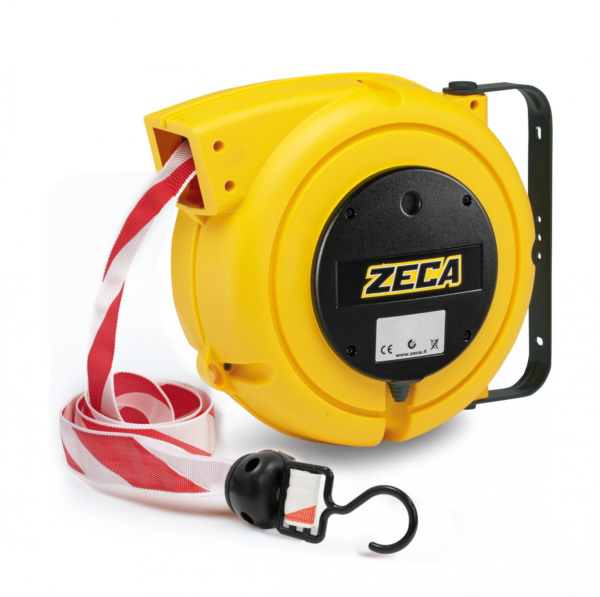
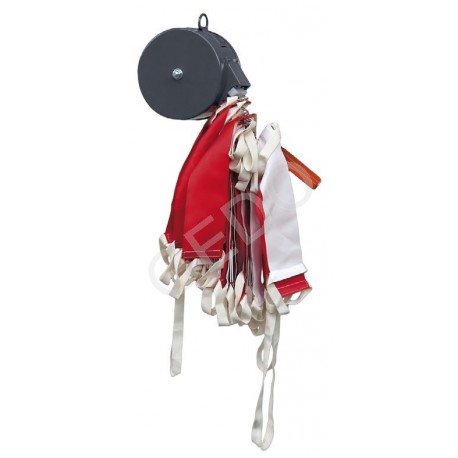
A stretched plastic tape slackens, twists and ends up showing its edge: seen from the front, it is no more than a line. A banner made of hanging vertical strips stays legible from any angle and moves in the wind, which catches the eye instead of disappearing. In an area crossed by vehicles or open to the public, the difference in perception is immediate.
Conversely, tape wins on speed and footprint. A two-kilogram casing moves from one station to another, hooks onto an improvised anchor point and comes off again at once. The banner, heavier and hung from a ring, is installed permanently.
The question to ask is therefore not which is better, but how many times the area will be marked off. A one-off intervention calls for tape; a pit perimeter marked off again every week calls for the banner.
Where it is used, concretely
Inspection pits in garages and heavy-vehicle workshops come first: the opening must be signalled around its whole perimeter as soon as the vehicle is removed, and complete kits combine reels, posts and base plates to close the perimeter.
Electric vehicle maintenance is the fastest-growing use. The location of a vehicle being charged or worked on must be clearly delimited to prevent any involuntary approach, and reel manufacturers now put this forward explicitly.
Then come machines locked out during an intervention, traffic lanes temporarily closed, delivery areas and construction zones inside an operating building.
Frequently asked questions
Does a signalling reel protect a dangerous area?
No. It signals it and deters entry, but it holds no one back. An open pit, a hopper or work at height call for a guard rail or a physical barrier. Demarcation complements a protection, never replaces it.
Striped tape or vertical-strip banner: which to choose?
Striped tape goes up and comes down in seconds and stows in a compact casing: it is the choice for temporary areas and one-off interventions. The vertical-strip banner stays legible from any angle and moves in the wind, which catches the eye instead of disappearing: it is the choice for repeated demarcation in the same place, such as the perimeter of an inspection pit or a passage regularly closed off.
Red and white or yellow and black: does the colour have a meaning?
Yes, and it is not a matter of aesthetics. Red and white marks a prohibition of access; yellow and black signals a permanent hazard or a risky traffic area. On a site where both coexist, use must be consistent from one station to the next, otherwise the signage loses its meaning.